
The sugar bride
Issue ten: fiction/nonfiction by Nike Sulway


For the last several years, I’ve been working on a novel that draws heavily on the fairy-tale tradition. The novel is set in rural Australia, and the narrative—a frame tale with a series of nested stories—concerns seven sisters whose lives intersect and overlap with traditional folklore in a range of ways.
‘The sugar bride’ is extracted from that work in progress. The stories this piece contains, and the commentary on them, are narrated by one of the characters in the novel: Petra Darke.
We are grateful to our paying subscribers, who provide us with the means to keep publishing original stories, poems, and more. If you haven’t already, please consider signing up, or giving a gift subscription.
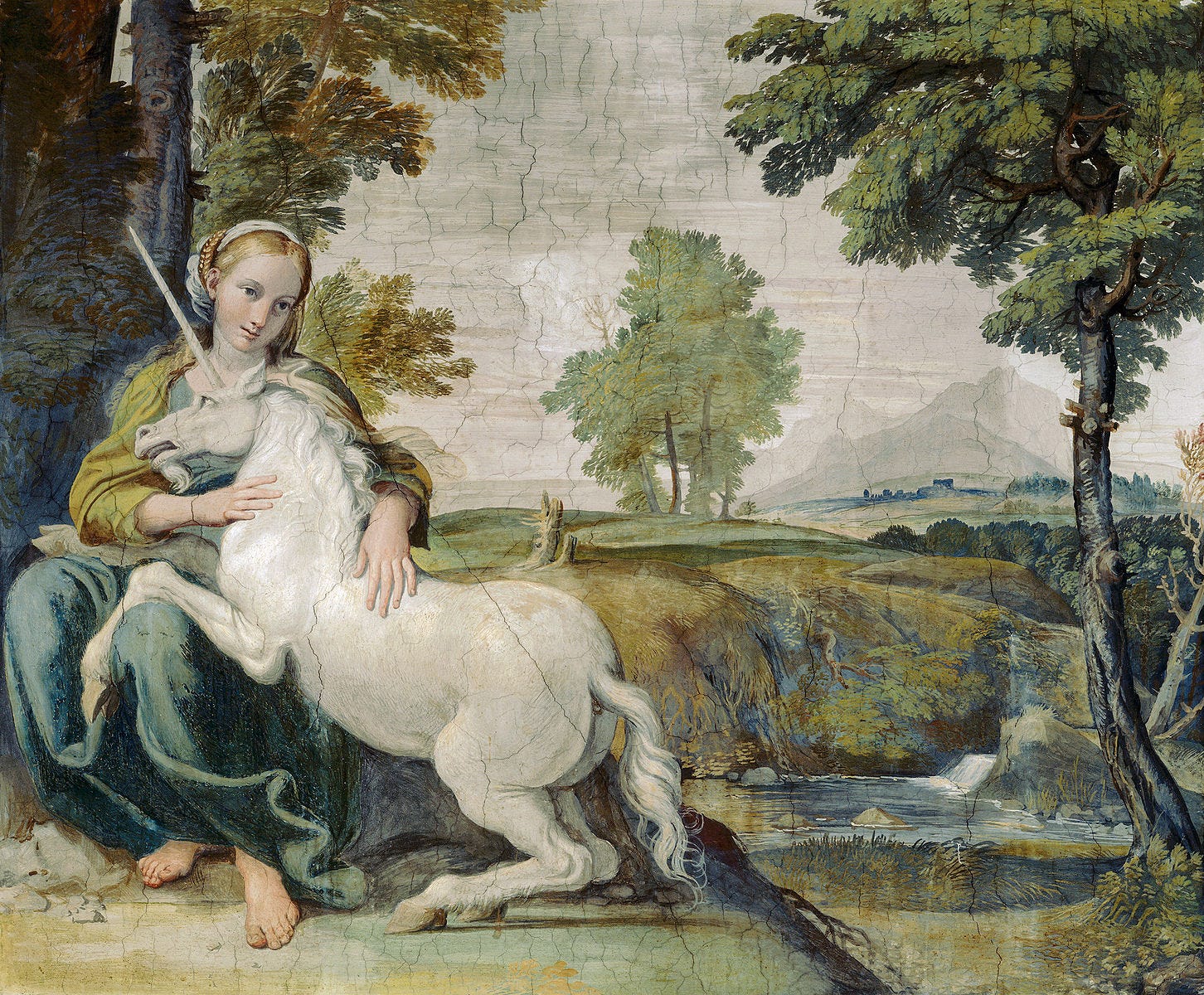
Art is dangerous. Giambattista Basile—the soldier, poet, courtier, and collector of fairy tales—knew this. How could he not? His Tale of tales was written in Neapolitan, in a city whose art scene was ruled by the cabal of Naples. Members of the cabal vandalised the work of their competitors, erased frescoes, issued death threats. Domenico Zampieri, commissioned by the city to paint several frescoes for a cathedral, fled in fear. His wife and children were imprisoned. After he was convinced to return and continue working, he produced three of a planned four altarpieces before he died suddenly, probably poisoned.
Perhaps this is one reason Basile’s collection of fairy tales is so full of distrust and knives. In one tale, Sapia Liccarda, a father of three daughters must go away on business but, before he leaves, he bars the doors, barricades the windows, and gives each of his daughters a ring to wear. Not diamonds or emeralds, but magic (the only magic in this tale): if his daughters commit shameful acts, the rings will become stained and spotted. Just as for Bluebeard’s last wife and Lady Macbeth, the women’s lust and curiosity will be revealed through stains on fingers, stones, and keys. No matter how hard they scrub, no matter how much they lie and dissemble, the spots will not come out.
The two older sisters barely wait until their father has closed the gate behind him before they invite the neighbour’s sons into their beds and quickly become pregnant. But Sapia Liccarda—wise Liccarda—slips through the youngest neighbour’s fingers.
The older sisters’ pregnant bodies, busy fermenting their illegitimate sons, require sustenance. Keen to see their sister’s ring as spotted as their own, they plead with her to go to the king’s house (did I mention that the neighbour was a king?) and get them some of his bread to eat. Liccarda dresses in rags and goes to beg food for her sisters: first bread, then pears. Each time, the youngest son is there. He tries to waylay her, but she eludes him.
The sisters each give birth to a son. Liccarda agrees to sneak the babies into the palace, where she lies the plump boys on the beds of their fathers. On the youngest prince’s bed—the bed of the man she has refused—she places a heavy stone. The two older sons are delighted with their gifts. The youngest, throwing himself onto the bed in a fit of pique, bangs his head on the stone. Sore-headed and rejected, he plots revenge.
The older sisters are to marry the two older sons. And why not make it a triple wedding? Liccarda prepares for her wedding night by making a copy of herself out of sugar paste. A sticky, sickly-sweet bride. She retires early from the wedding feast so that she can place the sugar-bride in her bridal bed, dressing the effigy in her own nightgown.
When Liccarda’s bridegroom enters, he cries out in rage and frustration that he doesn’t love her any more. (Of course, men rarely condescend to love women who make fools of them. Who refuse to submit to either their power, their wealth, or their cocks. Historically, a bride is a woman who is given to a man; her worth sometimes more, sometimes less, than the dowry her father pays to be rid of her.) What can a cricket, he roars, do against an elephant? Now you’re going to suffer! Here, the wounded bull elephant drives his dagger into his insect-wife’s heart, skewering her to the bed.
His injured pride not sufficiently satisfied by murder, the newly wed husband declares that he will drink her blood. He brings the blade of his dagger to his mouth and tastes … the sweetness of fragrant musk. He is overcome with remorse at having murdered such a sweet girl and raises the dagger to his own soft neck.
Liccarda comes out from behind the curtains and stays his hand. The two are reconciled. The sex is … sweet.
If I had been Liccarda I would have stayed behind the curtain. I would have let him draw the knife across his throat or come out of hiding only to aid him in plunging it into his heart. I would have smiled to see his blood spill over that of his sugar bride.
In Calvino’s version of the sugar bride story, The king in the basket, three daughters are locked into their home when their father, a woodcutter, goes away on business. He seals them in like virgin anchorites, leaving them alone with some gold and a basket, which they can lower into the street. It is by means of this basket that the king gains access to the girls, having them haul him up into their room. While there, he tells them about the balls he is holding and expresses regret that they won’t be able to attend.
That night, the youngest daughter, Leonetta, convinces her sisters to lower her into the street using the basket, and secretly attends the ball.
But this is no Cinderella tale. Leonetta, who is more of a revolutionary than a dancer, sneaks into the kitchen and steals food: roasted chickens, lamb, macaroni, and almond cakes. As much food as she can carry. What she cannot carry she renders inedible, spreading ashes and water over the feast.
On the night of the second ball, the kitchen is more closely guarded, so she sneaks into the cellar. There, she steals as much wine as she can carry. When her arms and baskets are full, she unstoppers all the remaining casks and lets the king’s wine flood the cellar.
On the night of the third ball, she sneaks into the cloakroom and again steals as much as she can carry: cloaks of unimaginable softness and warmth. The skins of sables, foxes, minks, and seals. Boots made from the finest calf leather. Hats with feathers plucked from exotic birds. Just as she is leaving the room, she strikes a match against her boot and sets what she cannot carry alight.
The palace burns.
The king, of course, on the days between each ball, has come to visit the imprisoned sisters, had them haul him up in their basket, and sat with them for hours, bemoaning the thefts and destruction. He wails and beats at his breast. He is surrounded by traitors! He is considering abdication! He is so distracted by his own despair that he does not notice the sisters’ mouths are slick with the grease of his roasted chickens. That the bones of his feast are piled up in the corners of their cell. He does not smell the wine on their breath or see the grains of sticky sugar on their cuffs and fingers. Only on his last visit, as he sits with his head sunk in his hands, bathing in his own despair, does he see the tip of his stolen silver slipper peeking out from under Leonetta’s skirts.
He begins to plot his revenge.
He summons the woodcutter home and informs the wandering father that he wishes to marry his daughter. Any one of his daughters. Leonetta, absurdly, agrees. This is what youngest daughters do in fairy tales: agree to marry tyrants and monsters. She prepares for her wedding night by making a life-size pastry puppet with a heart of sugar and honey.
On the wedding night the king enters his bedchamber. His new bride is already tucked up beneath the sheets, endearingly coy. Alone at last, he interrogates her. After all, what else do married men desire but to have their wives admit to their calumny? To marry and imprison the women who would eat their food and drink their wine and burn down their houses? Leonetta, underneath the bed, pulls the sugar-puppet’s strings and nods the sugar-puppet’s head. Admits everything. Denies nothing. The king, unmollified but not unarmed, thrusts his sword into his bride’s sweet heart, up to the hilt. Sugar and honey bathe his wrists. He is sticky with her blood. Her secrets.
In this tale, as in many other versions, he repents at this moment and, over the body of the woman he has killed, declares his love for her. He weeps, perhaps, and strikes his breast (you know, already, that he is a foolish and excessively emotional man). In a room where the only other occupant is, in his view at least, a dead girl, he declares that he will end his own life. (Though Calvino doesn’t say so, it’s probable that this monologue goes on for quite a while. Romeo, finding his Juliet dead in the tomb, delivers 43 lines before he finally drinks his poison. O my love! my wife! Death, that hath suck’d the honey of thy breath, hath had no power yet upon thy beauty. These lines will do for Leonetta’s groom: though in this case it is he, not death, that has suck’d the honey from his bride).
The two marry and, according to the narrator, live happily enough after that.
This is clearly a lie.
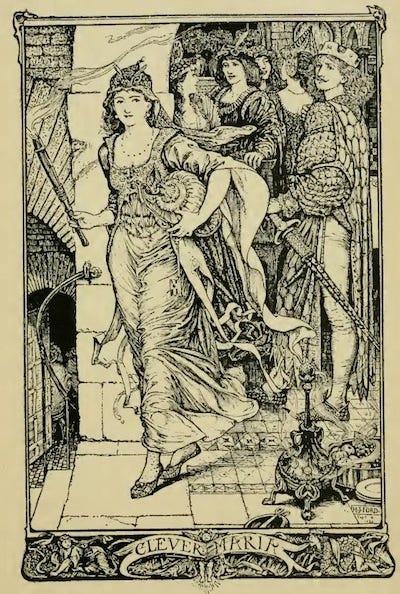
In Andrew Lang’s crimson fairy book, there is a Portugese version of the sugar bride’s tale—Clever Maria—in which, before the father goes away, he gives each of his daughters a pot of basil.
The youngest daughter—Maria—is as contrary and light-fingered as Calvino’s Leonetta. When the king visits her sisters, intending to stay the night, she sneaks out and spends the evening with an old woman. Her pot of basil blooms and blooms: those of her two sisters wither and die. Later, in order to feed her sisters, she steals medlar apples and lemons from the king’s orchard. When she returns for a hand of bananas, he captures her, but she escapes. Her escape is so difficult for him, so painful, that he falls into a strange sickness. This is not love sickness, nor is it the green sickness that was once said to afflict virginal women. Fucking will not cure him, only vengeance.
Maria, whose two sisters have each given birth to a daughter, dresses up as a boy, fills a basket with flowers and delivers it to the palace. The basket is taken to the king who, when he lifts the lid, discovers among the blooms two fine daughters. (The story claims these squalling beauties are the daughters of his friends, but who can doubt that they are, instead, the blossoms of those nights he spent alone with Maria’s sisters?)
The king decides to marry the woman who evades him; who steals from him …
It is odd, don’t you think, that all the men in these stories seek vengeance through marriage?
Maria prepares for her wedding night, not by stitching seed pearls on her gown, or folding silks and satins into her trousseau, but by procuring a doppelgänger doll, with a string attached to its head.
From here the tale is by now familiar. The king enters his bedroom to find his bride tucked up in the bed. A patient man, he does not strip off and join her: the nuptials can wait until he has secured her confession. At each accusation she nods—too ashamed, he assumes, to open her mouth and speak. Enraged, he lops off her head, which rolls towards him. Kisses his bare ankle. It is the seeming kiss that undoes him.
He weeps and wails and threatens to destroy himself. Maria comes out from under the bed and stops his hand.
A man’s sword is easily drawn away from his own soft neck.
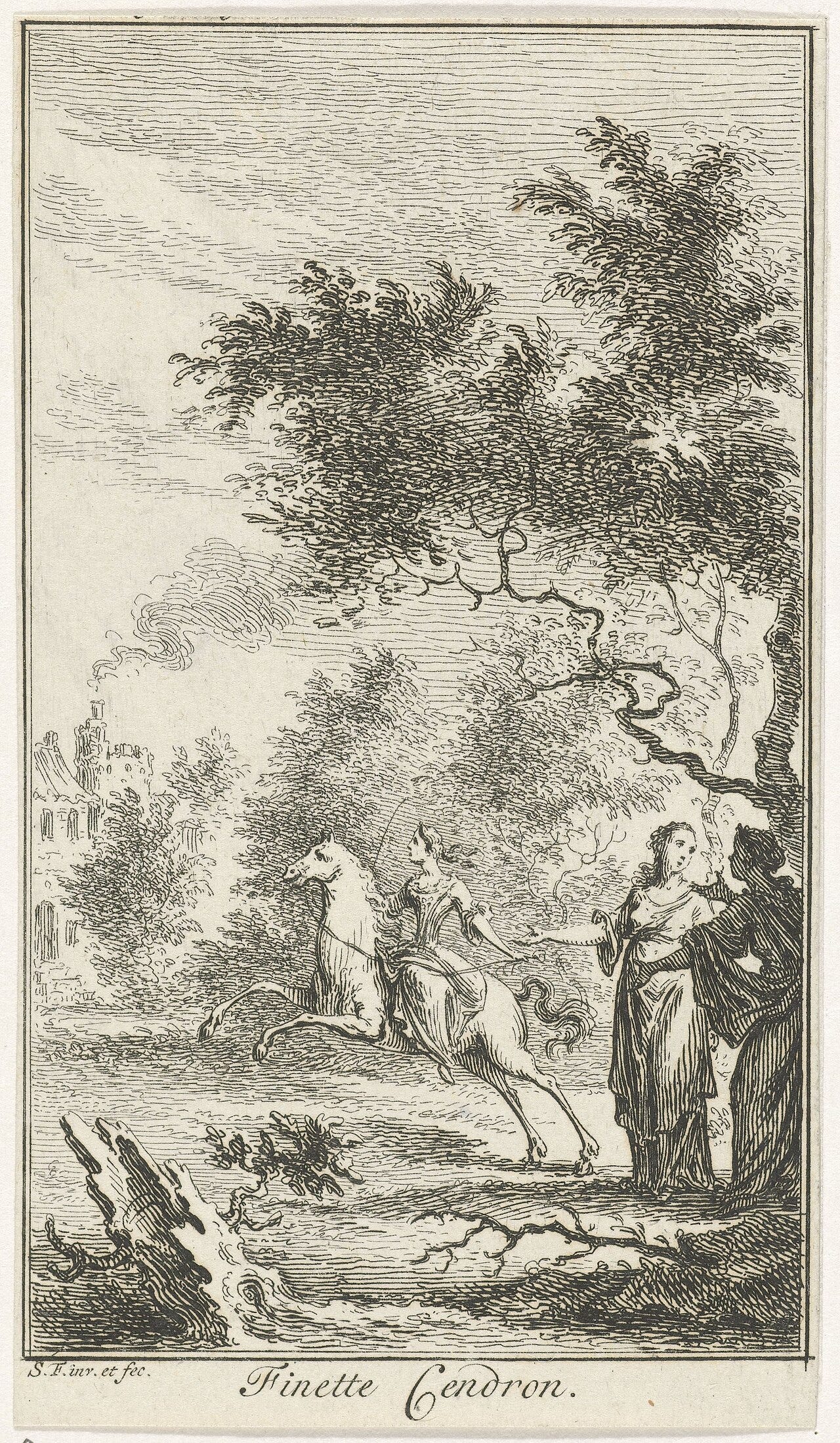
In 1695, Marie-Jeanne L’Héritier de Villandon dedicated a much-altered version of the sugar bride’s tale, The Discreet Princess, or the Adventures of Finette Cendron, to the young and beautiful Henriette Julie de Murat. This was a few years before Henriette was exiled from the Parisian court because of a series of scandals involving affairs of the heart (and the loins) with men and—far more scandalously—with women. Marie-Jeanne was around twenty years older than her dedicatee: old enough to play the part of agony aunt, or fairy godmother. Did she know or suspect that Henriette would go on to live a life of debauchery and exile? Was her tale of two sisters who ‘fell scandalously / into frightful wildness’ intended as a cautionary tale, or a wink between women who knew all too well about the lives of women whose lovers enter and depart their bedrooms through the windows, who dress in peasant’s rags or men’s clothes to escape prison, whose babies are conceived outside the marriage bed?
Mlle L’Héritier’s tale does not conclude with a marriage bed and a sugar bride, but with a prince fading away over his desire for a beautiful shoe. It is also the only version of the tale in which the heroine has a mother, albeit an unloving and neglectful one.
There are often
oddities in fairy tales. Motifs that seem to serve so little purpose in the story that you wonder, when you read them, why they are there.
In Lang’s Clever Maria there is an oddity I neglected to mention. An image that is too enigmatic to make sense, or to leave out. When the king decides to marry Maria, he does not go about the thing directly. He summons Maria’s father to his court and demands that the merchant supply him with a coat made of stone. This is an impossible task, like sorting peas from cinders, or procuring a piece of linen so fine it will pass through the eye of a needle. If the king was aware he was a character in a fairy tale, he might have known that even such an impossible task would be fulfilled. Perhaps, like the hero of d’Aulnoy’s The White Cat, the merchant would visit a palace staffed by bodiless hands who can procure any gift or service, no matter how strange.
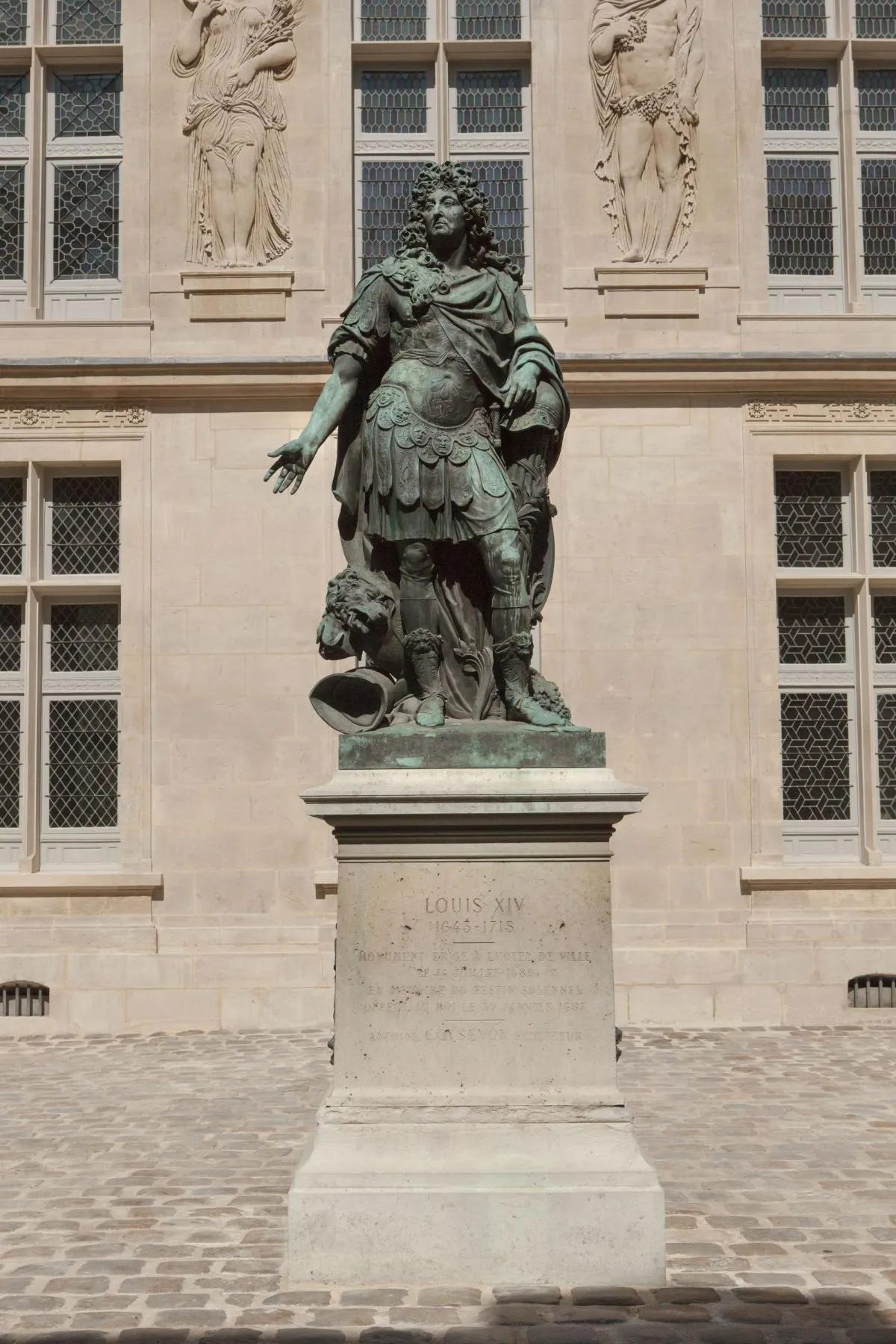
Alas, no, in this world as in the Portugese tale, the king will never have his coat of stone. Not until he is dead, and his image is carved in marble. Not until this copy of the king—stronger, taller, even a little kinder than his bone and sinew form—stands in the centre of a roundabout watching the palace transformed into a monastery, and then a boarding school. His former home is eventually requisitioned by soldiers who shoot holes in the ceilings and scrawl graffiti on the walls before they are evacuated. The palace falls into disrepair, then is resurrected as a suite of expensive apartments: the ballroom an indoor pool, the throne room a gymnasium. The king will stand in the centre of the crossroad for centuries, with his chin tilted up just a little, his hand resting on the hilt of the sword with which he severed his sugar-wife’s head, and his cloak of stone swelling around him. Untroubled by any breeze.

Nike Sulway is a multi-award winning writer, editor, and emerging artist.
Her previous books for adults include Dying in the first person, Rupetta, The true green of hope, and The bone flute. Her works for children, include Winter’s tale and What the sky knows. Her works have won, and been shortlisted for, a number of literary awards, including the Queensland Premier’s Literary Award, The Children’s Book Council of Australia Awards, the Aurealis Awards, the Norma K Hemming Award, the Commonwealth Writers Prize (Best First Book/Asia Pacific Region), and the IAFA Crawford Memorial Award. Rupetta was the first work by an Australian author to win the Otherwise Award (formerly the Tiptree Award).
Along with the amazing and enchanted Carina Bissett, she is the founder and chief editor of The Orange & Bee.
She and her wife live, and occasionally work, on the unceded lands of the Bundjalung peoples, a landscape rich with stories and wonder.
You can subscribe to/read her newsletter at Bird+Bone.
Oh I love your writing! And I always loved the sugar-bride stories - though she does need a different ending. I see her in L'Heritier's "The Discreet Princess" and Murat's "The Pig Prince" too. She deserves so much more for her cleverness.
So interesting. I had forgotten the sugar bride from the Tale of Tales, but I have retold the marzipan husband tale from it. And stories in which the bride is replaced by a doll.